Resource & Expense Management platform
Panna Timesheets is a resource and expense tracking platform for growing teams that were struggling with fragmented tools, low adoption, and poor reporting.
In this project, the goal was to turn a compliance-heavy task into a simple, daily habit while giving HR and finance reliable, real-time data.
Year
2022
Scope
(React + MUI) Product Design, UI/UX
Timeline
3 months
Problem & Context
Employees saw time entry and expenses as a chore, often avoiding or delaying updates; admins had to chase people and manually clean data across spreadsheets and legacy tools. HR and finance lacked a single source of truth, making it hard to understand project efforts, leaves, and expenses at a glance or generate reliable reports. From a product perspective, there were three core gaps: - The time-entry experience was repetitive and boring, leading to poor completion rates. - Reporting for HR and finance required heavy manual work outside the system. - Org-level configuration (teams, policies, calendars) was complex and not well supported by existing tools
Key Design Decisions
Rather than presenting a flat feature list, the work centred on a few key product decisions.
Focus Area | Principle | What I Did |
|---|---|---|
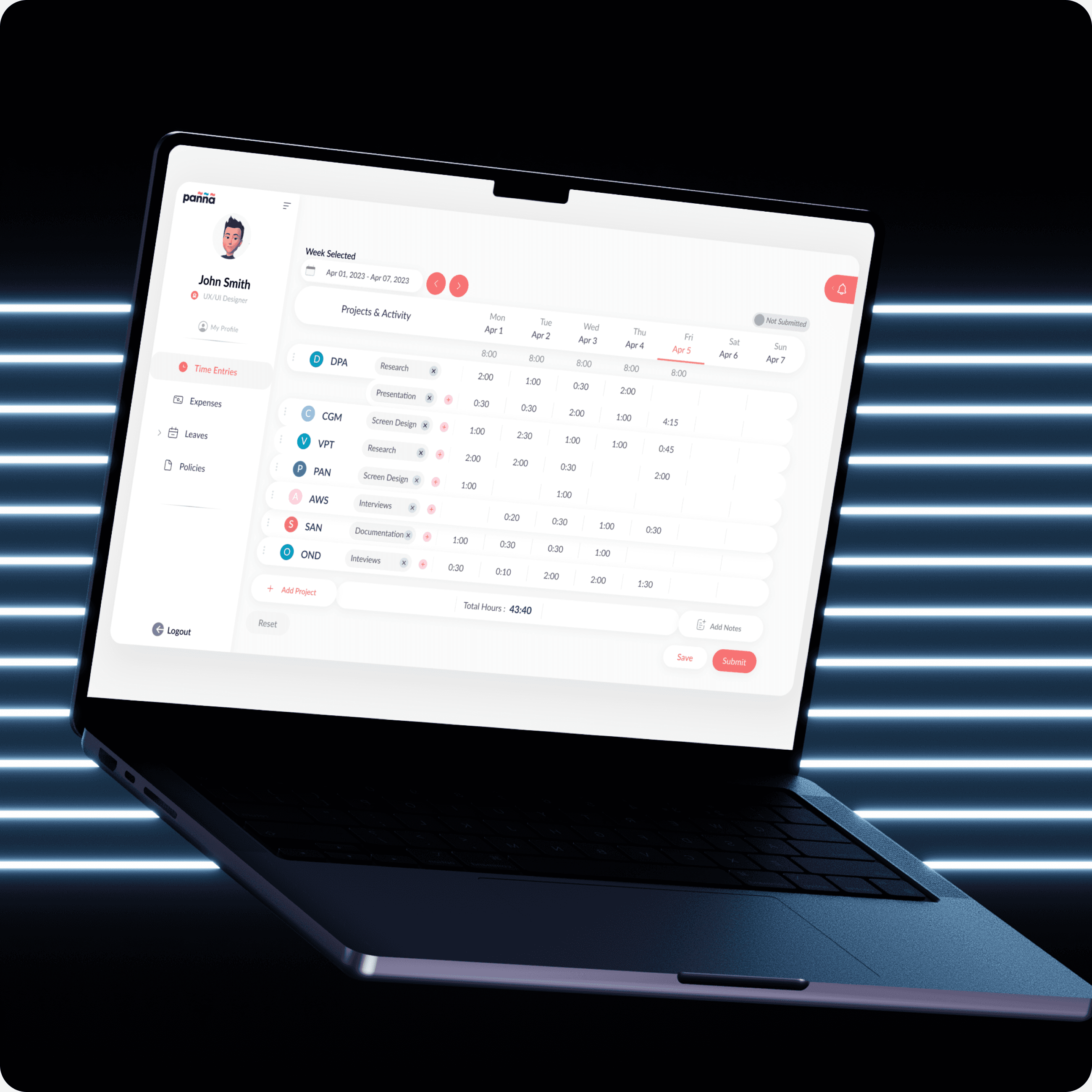
Time entry | Make time entry feel lightweight | Used clear navigation and a focused layout to minimise cognitive load during daily logging, and added small moments of delight (visual hierarchy, avatars, microcopy) while keeping primary actions efficient. |
Dashboards | Invest in dashboards over static reports | Designed real-time dashboards with easy filters so stakeholders could self-serve insights and ensured layouts were customizable for different mental models across HR, finance, and project leads. |
Complexity | Support real organisational complexity | Built patterns for project and activity-level tracking and defined flows for multi-bucket leave and holiday management to support diverse calendars and policies at scale. |
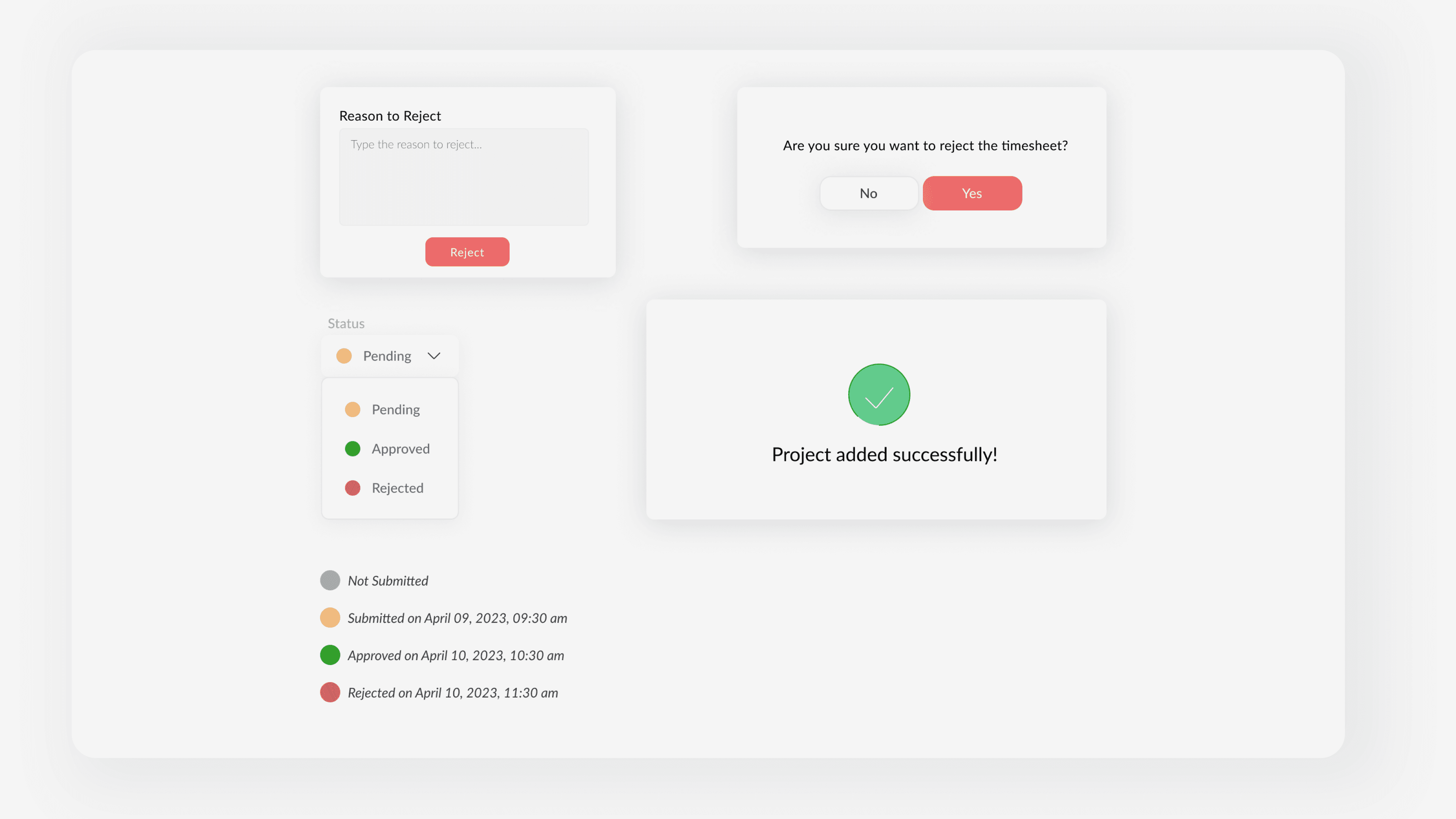
Governance | Reduce friction around governance | Integrated single-click approvals and rejections into the core experience and standardised navigation patterns so frequent tasks (approve, edit, duplicate, submit) felt predictable. |
Design Approach
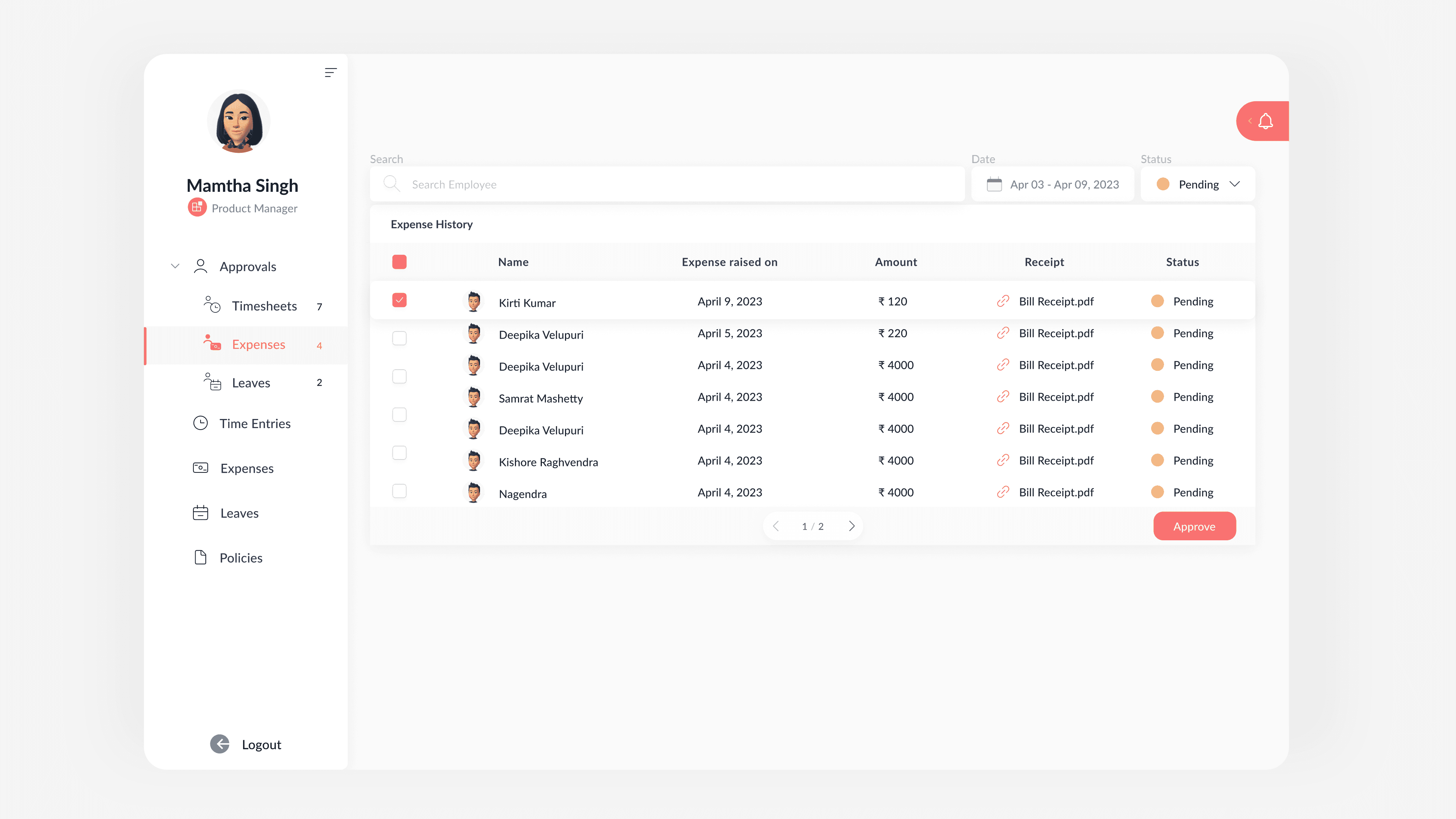
The resulting experience reframed time and expense tracking from a low-priority compliance task into a more approachable, self-service SaaS tool that teams could realistically use every day.
For admins and leadership, the combination of interactive dashboards and tailored HR/finance reports created a clearer picture of how time, leave, and expenses were distributed across projects and teams.
This project strengthened the ability to design SaaS products that sit at the intersection of user empathy and operational complexity, and to make intentional trade-offs between simplicity in the UI and flexibility in the underlying workflows.
The focus was on designing a SaaS-native experience that balanced everyday usability with the complexity of real organisational workflows.
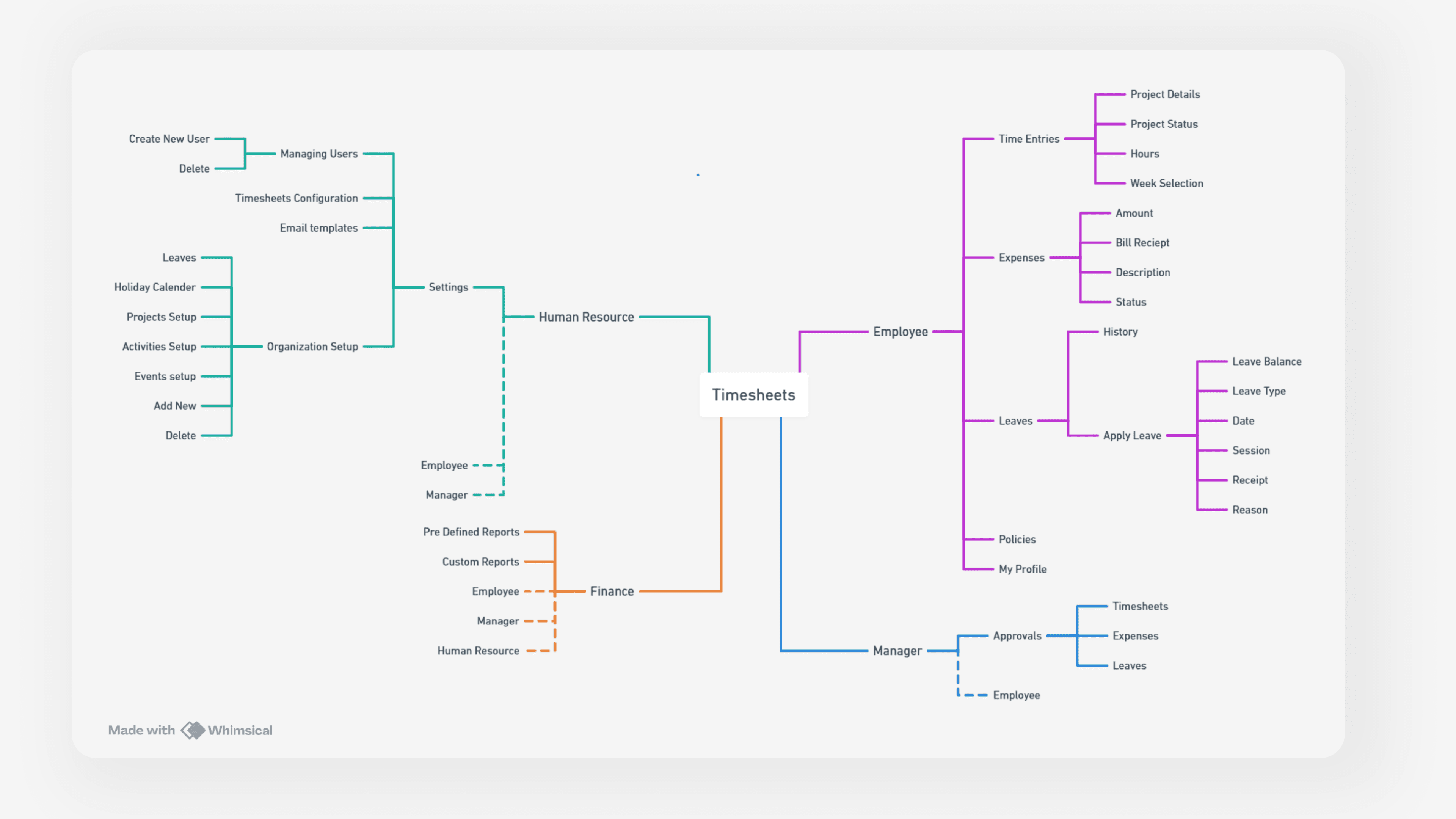
Mapped end-to-end workflows for employees, managers, HR, and finance to identify friction points in time entry, approvals, leave, and expense submission.
Translated those pain points into clear UX goals: simplify daily tasks, surface the right context at the right moment, and reduce reliance on offline spreadsheets.
Structured the product into clear modules (time, expenses, leave, dashboards, org setup) so each user type could quickly find what they needed.
On the interaction and UI side:
Designed a simple, focussed interface for time tracking and expense submission so repetitive actions felt quick rather than bureaucratic.
Introduced interactive dashboards with filters and customizable layouts to help managers and admins understand where time and money were going without exporting data.
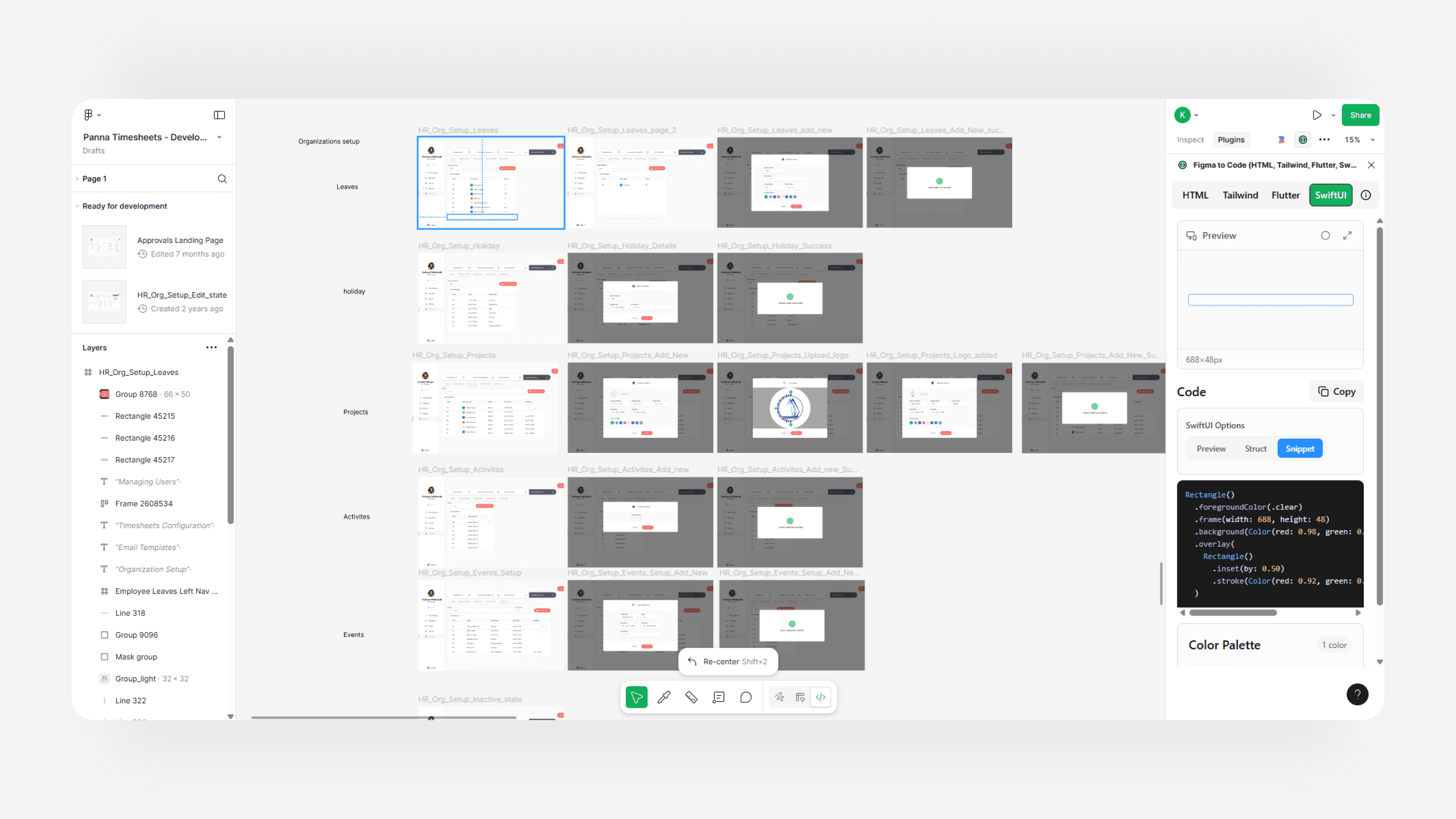
Created a scalable organisation setup area to support flexible workflows, multi-bucket leave and holiday management, and growing team structures.